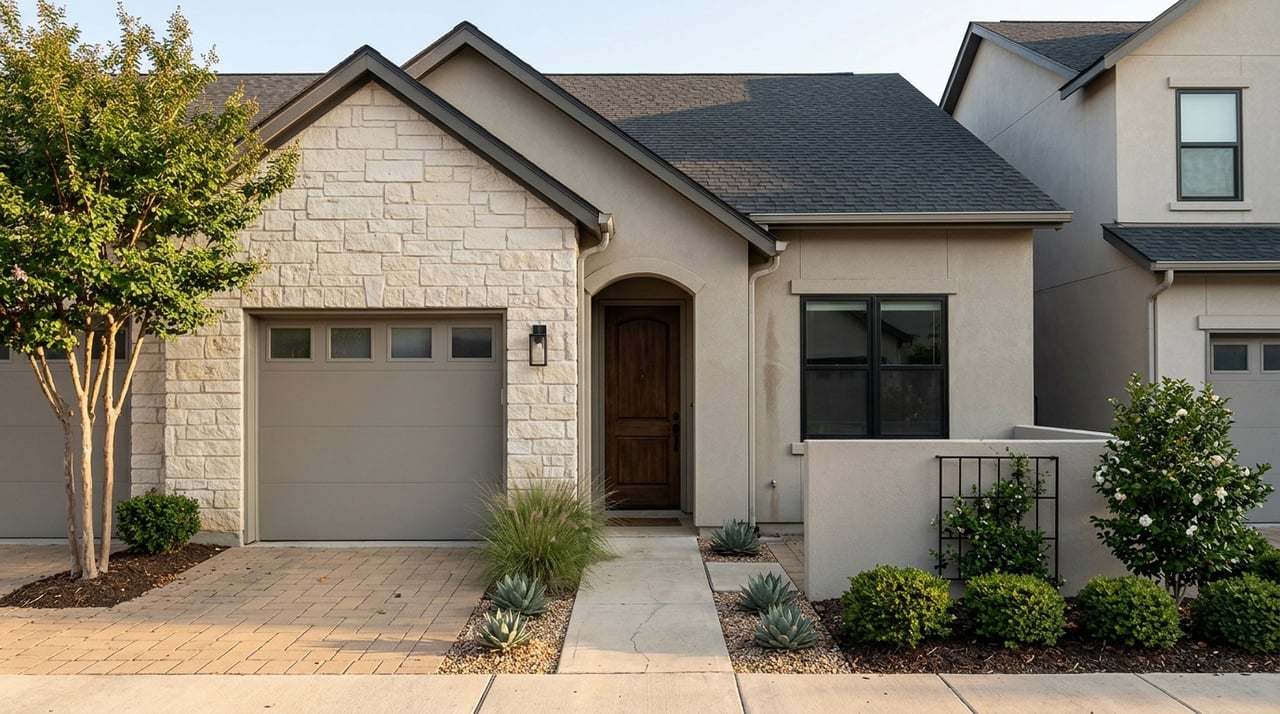
If your schedule already feels packed, choosing the right home in Houston can feel like one more big decision with too many moving parts. You may be trying to balance commute time, upkeep, monthly costs, and long-term flexibility, all while sorting through listings that do not always tell the full story. The good news is that the townhome versus single-family choice gets much easier when you focus on how you actually live, not just what looks best online. Let’s dive in.
Houston adds a local twist to this decision because the city does not have a citywide zoning ordinance. Instead, development is shaped by ordinance codes, along with deed restrictions that can vary by subdivision, section, or even lot, according to the City of Houston planning department.
That means your decision is not only about attached versus detached living. It is also about the specific rules attached to the property, including parking, exterior changes, and how the home can be used over time.
Houston planning materials describe a townhouse as a multi-floor home that shares a party wall with an adjacent structure but has its own entrance. Those same materials also note that some attached homes may still be treated as single-family residential under local rules, so it is smart to verify the deed, plat, and association documents instead of relying only on the listing label or exterior appearance, as explained in the city’s Livable Places guide.
If you want less exterior work on your plate, a townhome may be the better fit. Houston’s planning framework around narrow lots, shared access, and compact development supports the idea that townhomes often come with less private outdoor space and less yard care than detached homes.
For busy buyers, that can be a major plus. Less lawn to maintain often means fewer weekend chores, fewer landscaping decisions, and a more lock-and-leave lifestyle if you travel often or are managing a relocation.
Townhomes often appeal to buyers who want:
That said, less maintenance does not always mean less responsibility. You still need to understand exactly what the association covers and what remains your responsibility before you buy.
Single-family homes are generally the detached option, and that usually means more private outdoor space. In Houston, that can translate to a yard, more separation from neighbors, and greater flexibility in how you use your exterior areas, though the exact property rules still matter.
For many buyers, that added space brings a sense of freedom. It can also support future plans better if you want room to spread out, entertain outdoors, or simply have more privacy than an attached home usually offers.
A detached home is often a better fit if you want:
Still, more space usually comes with more upkeep. You may have more exterior surfaces, more lawn care, and more maintenance costs to budget for over time.
Parking is one of the most Houston-specific parts of this decision. The city’s Prohibited Yard Parking program applies in certain single-family residential areas, and local rules can vary by neighborhood and subdivision.
At the same time, Houston’s housing updates encourage features such as rear or shared access, narrower driveways, and street-facing design elements. In practical terms, that means many townhomes may rely more on garages, shared drives, or designated parking setups, while detached homes may offer more driveway flexibility depending on the exact location.
Before choosing either property type, ask about:
For a busy buyer, these details matter more than they may seem at first glance. Parking frustrations can quickly become daily frustrations.
If you are deciding based on budget, compare the full monthly carrying cost, not just the purchase price. This matters in Houston because a townhome with a lower price may still cost the same as, or more than, a detached home once you factor in dues and other recurring expenses.
Texas does not have a state property tax, and local taxing units set the rates, according to the Texas Comptroller. In Harris County, homestead exemptions can make a real difference. The Harris Central Appraisal District explains that eligible homeowners may qualify for homestead exemptions, and a residence homestead may also receive a cap on annual taxable-value growth under applicable rules.
When you evaluate a Houston townhome versus a single-family home, include:
This is where buyers can get surprised. A detached home without association dues may balance out against a townhome with monthly dues, or the reverse may be true depending on taxes, insurance, and maintenance needs.
Many townhome communities involve a homeowners association or property owners’ association. Texas law clearly recognizes both townhouse regimes and association assessments in the Texas Property Code and Chapter 209 provisions on assessments.
For you, that means dues, possible special assessments, and rule enforcement may be a central part of ownership in a townhome community. Some detached-home communities also have associations, so this is not exclusive to townhomes, but it is often more central to the townhome ownership experience.
Ask to review:
If your goal is simplicity, the right HOA can support that. If your goal is maximum flexibility, the rules may feel restrictive.
Busy buyers often focus on move-in logistics first, but your future plans matter too. In Houston, deed restrictions can vary by subdivision and even by lot, according to the city’s deed restriction guidance.
That means a single-family home may offer more room to grow, but local restrictions can still limit additions, exterior changes, parking choices, or other property decisions. A townhome may offer less exterior change from the start, but the bigger issue is often how much control the association and recorded documents have over day-to-day ownership.
Consider these questions:
The answers usually point clearly toward one option.
No matter which property type you prefer, flood risk should be part of your review. FEMA says the Flood Map Service Center is the official source for flood maps, that floods do not follow property lines, and that there is no no-risk flood zone.
That is especially important in Houston. FEMA also notes that most homeowners insurance does not cover flood damage, so an address-level review is worth your time before you commit.
If you want the shortest path to a practical answer, use this framework:
For many Houston buyers, the right answer is not about which home type is better overall. It is about which one makes your week easier, your costs more predictable, and your future plans more realistic.
If you want help narrowing down Houston options without wasting time on homes that do not match your lifestyle, Evie Hansen offers responsive, concierge-level guidance designed for busy buyers, relocations, and time-sensitive moves.
4204 Gardendale San Antonio TX 78253
4204 Gardendale San Antonio TX 78253